The reopening of maritime traffic through the Strait of Hormuz has shifted the industry's focus from disruption to recovery. While commercial shipping has resumed in a controlled manner, the accumulated backlog created during the height of the crisis remains one of the largest operational challenges facing global logistics.
For chemical buyers, the key question is no longer whether ships are moving. The more important issue is how quickly the remaining queue can be processed and what that means for cargoes still awaiting departure from Gulf ports.
The Scale of the Backlog Remains Significant
At the peak of the Hormuz disruption, more than 1,550 commercial vessels and approximately 22,500 mariners were reported stranded across Gulf anchorages and waiting areas.
Although traffic has steadily improved, the accumulated queue cannot disappear immediately.
Current vessel movements demonstrate that recovery is underway, but they also illustrate the scale of the remaining operational task.
Hundreds of ships continue progressing through controlled transit schedules as authorities balance commercial efficiency with maritime security.
Transit Activity Is Increasing
Current shipping data indicates that approximately 149 vessels are now in active transit through the wider Hormuz operating area.
This represents substantial progress compared with the early stages of the crisis.
However, an important distinction must be made.
Not every vessel observed in transit is necessarily departing the Gulf.
The total includes a combination of:
Outbound commercial cargo.
Inbound vessels.
Ships repositioning within the region.
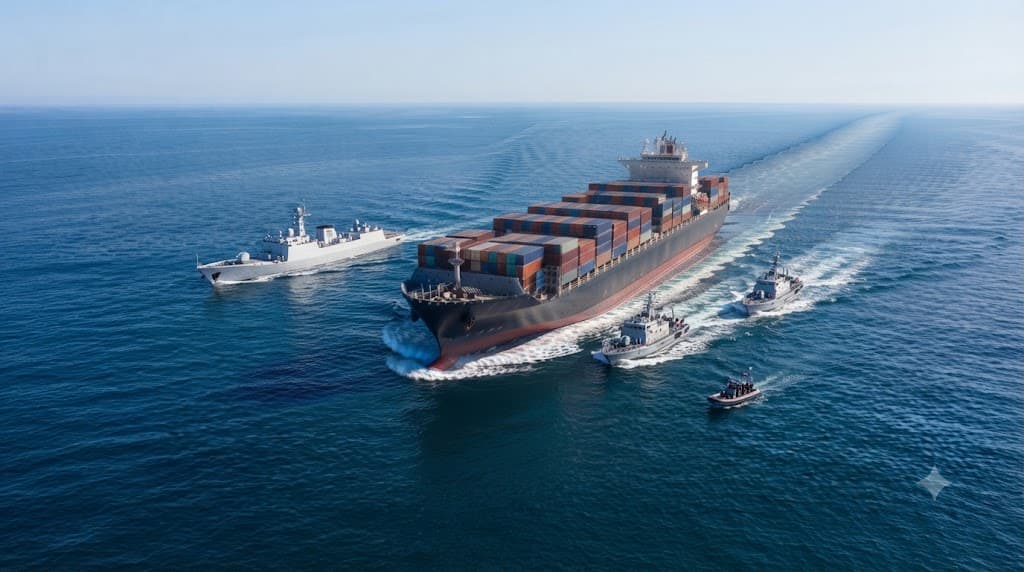
Escort operations supporting different categories of traffic.
Consequently, active vessel movements should not be interpreted as the same number of completed backlog clearances.
Daily Throughput Determines Recovery Speed
The most important variable for procurement professionals is daily completed transit capacity rather than the total number of ships visible on marine tracking systems.
If convoy operations consistently enable approximately:
Four escorted convoy groups per day.
Eight to ten vessels within each convoy.
The resulting throughput could reach approximately 30 to 40 completed vessel transits per day.
At this operating rate, the remaining backlog can be reduced steadily without requiring an immediate return to unrestricted commercial navigation.
What This Means for the Overall Queue
Using these operational assumptions, industry participants can begin estimating the likely duration of backlog clearance.
While actual daily throughput will fluctuate according to weather, security conditions and convoy scheduling, sustained movement at approximately 30–40 completed transits per day would gradually reduce the remaining queue over several weeks rather than several months.
This suggests that the majority of stranded commercial traffic could be processed during the latter part of the summer, provided current operational conditions remain stable.
Importantly, these calculations should be viewed as planning estimates rather than guaranteed delivery schedules, since daily convoy capacity and operational priorities can change.
Cargo Priority Continues Influencing Exit Timing
Not every vessel moves through the queue in the order it originally arrived.
Commercial priority continues influencing convoy allocation.
Higher-priority cargoes generally include:
LNG carriers.
Crude oil tankers operating under time-charter agreements.
Chemical tankers carrying strategically important industrial feedstocks.
Fertilizer cargoes supporting seasonal agricultural demand.
General bulk cargo with lower commercial urgency.
For procurement teams, understanding cargo priority often provides a more realistic delivery forecast than monitoring queue size alone.
What This Means for Chemical and Fertilizer Buyers
Companies tracking specific Gulf-origin cargoes should recognise that operational recovery is progressing, but shipment timing will continue to depend on convoy allocation and commercial priority.
Buyers monitoring fertilizer cargoes such as vessels associated with Bahri Wafi, Bahri Bulk and Chang Chang Dong Hai should continue coordinating closely with suppliers, freight forwarders and vessel operators rather than relying solely on public vessel positions.
Based on current operational assumptions, many cargoes delayed during the height of the crisis are likely to arrive progressively during mid-August through early September, although actual delivery dates will continue to depend on convoy scheduling, destination port availability and onward logistics.