Introduction
Total cost of ownership (TCO) is rapidly becoming a strategic lens for water and wastewater treatment professionals across America. Utilities, industrial plants, and commercial facilities are under pressure to reduce operating expenses, meet tightening discharge regulations, and support sustainability commitments. In this context, coagulants such as polyaluminium chloride (PAC) are often evaluated primarily on unit price per ton or per pound. However, this narrow focus can obscure the much larger financial impact of treatment performance, sludge generation, energy use, and compliance risk over the full lifecycle of a chemical program.
For many American operators, a small difference in coagulant unit price can seem decisive when budgets are tight. Yet data from utilities and industrial sites show that chemicals typically represent only 15–30% of total treatment costs, while labor, sludge handling, energy, and capital depreciation account for the majority. A cheaper coagulant that increases sludge volume, requires higher doses, or causes pH swings can quickly erase any savings at the purchase level. Understanding TCO helps decision-makers choose solutions that are genuinely cost-effective, not just inexpensive upfront.
This article examines how to evaluate the total cost of ownership of coagulants, with a focus on polyaluminium chloride and related water treatment chemicals available via Chemtradeasia.com. It explores why unit price can be misleading, how PAC compares with traditional alum and ferric salts, and how optimized PAC programs can reduce overall costs in American municipal and industrial applications. The goal is to equip procurement teams, plant managers, and engineers with a structured way to analyze chemical choices beyond the price list.
Understanding Total Cost of Ownership in Water Treatment
Total cost of ownership in water treatment encompasses all direct and indirect costs associated with using a product over its effective life in the process. For coagulants and flocculants, this includes not only the purchase price but also costs linked to dosing infrastructure, storage, handling, sludge treatment, energy consumption, process stability, and regulatory compliance. In American plants, where labor and disposal charges are relatively high, these downstream costs can dwarf differences in chemical unit price.
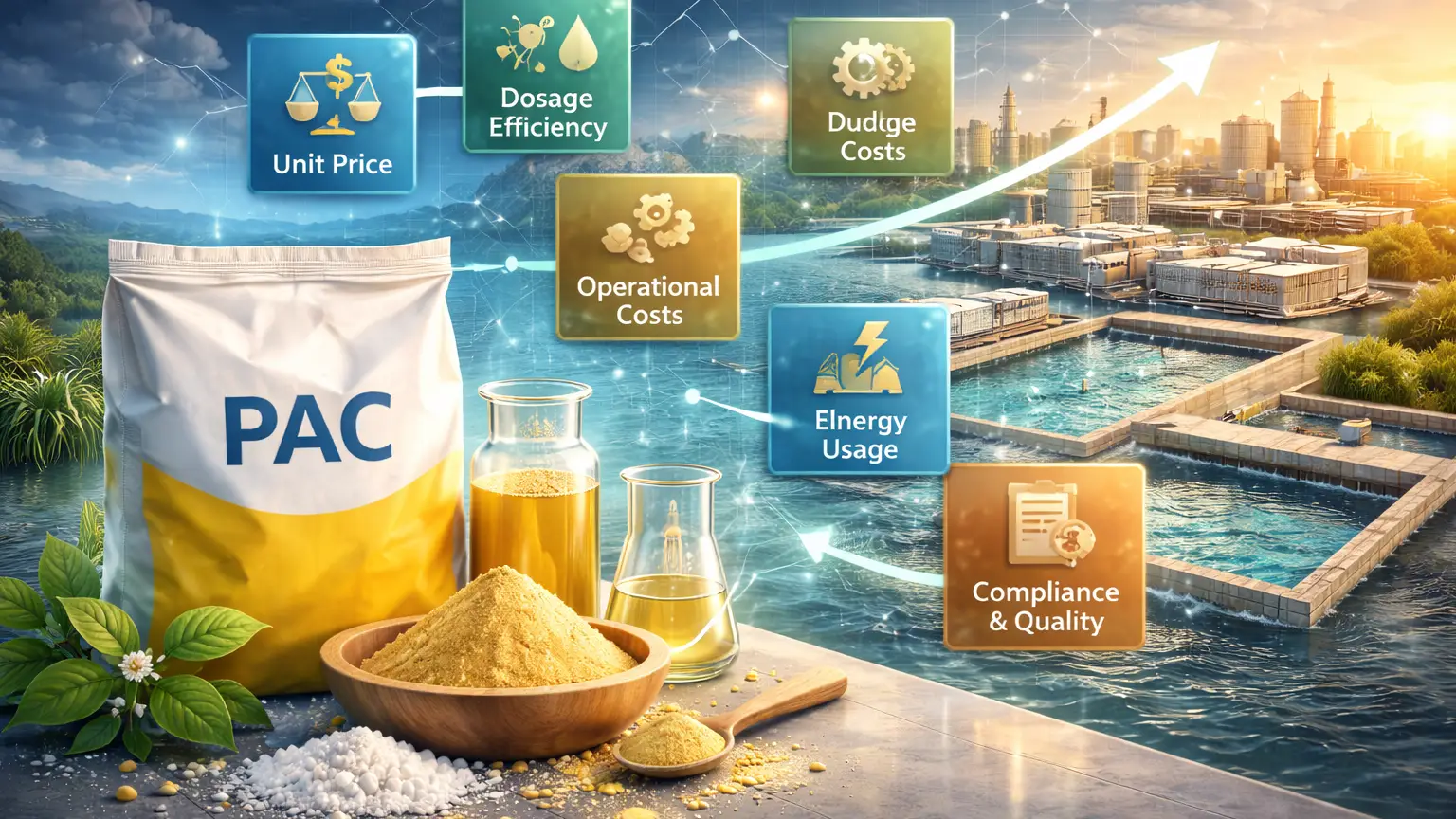
A typical TCO model for coagulants will include several categories. Direct chemical cost covers the price per dry ton or per gallon and the actual dose required to achieve target turbidity, color, or contaminant removal. Operational costs include labor for monitoring and adjustment, maintenance of pumps and lines, and any additional chemicals such as alkali for pH correction. Disposal and by-product costs cover sludge dewatering, transport, and landfill or beneficial reuse fees. Finally, risk and compliance costs relate to potential penalties, reputational damage, or capital upgrades triggered by inconsistent effluent quality.
When these components are quantified, operators often find that a coagulant that achieves better removal at lower doses and generates less sludge can create substantial savings, even if its sticker price is higher. For example, a 10–20% reduction in sludge volume can translate into hundreds of thousands of dollars per year in avoided hauling and tipping fees for a mid-sized municipal plant. Similarly, improved clarification can reduce the load on downstream filtration and disinfection, cutting energy use and extending media life. A robust TCO framework helps quantify these benefits and compare options on a like-for-like basis.
Why PAC Unit Price Alone Is Misleading
Focusing solely on PAC unit price can be misleading because it ignores dose efficiency and performance. Polyaluminium chloride is a pre-hydrolyzed aluminum coagulant with higher basicity than traditional alum (aluminum sulfate). This means more of the aluminum is present in reactive polymeric species that are effective at destabilizing colloids. In practice, many plants achieve target turbidity and color with 20–40% lower aluminum dose when switching from alum to PAC. If procurement compares only the price per ton without considering the dose reduction, a higher-priced PAC may appear more expensive even though the cost per treated cubic meter of water is lower.
Another hidden factor is pH adjustment and alkalinity consumption. Traditional alum tends to consume more alkalinity, often requiring supplemental lime or caustic soda to maintain optimal pH for coagulation and downstream processes. PAC products, especially medium- to high-basicity grades, typically have a milder impact on pH. This can reduce or eliminate the need for pH correction chemicals, which in many American plants represent a significant line item. When the cost of alkali, additional dosing equipment, and operator time is included, the apparent advantage of a cheaper alum can disappear.
Sludge generation is equally critical. Coagulant choice strongly influences the volume and characteristics of sludge produced. PAC often forms denser flocs and can reduce sludge volume compared with alum at equivalent treatment performance. In the United States, sludge disposal costs—covering dewatering, transport, and landfill or land application—can range from USD 50 to over USD 150 per wet ton depending on region and regulations. Even a modest 10% reduction in sludge mass can yield substantial annual savings. Evaluating PAC purely on price per ton ignores these downstream financial impacts and can lead to suboptimal procurement decisions.
Polyaluminium Chloride (PAC) Solutions from Chemtradeasia.com
Chemtradeasia.com supplies a range of polyaluminium chloride grades tailored to different water and wastewater treatment needs. Typical PAC products are available in both liquid and powder forms, with Al2O3 content commonly in the 10–18% range for liquids and higher for solids. Basicity can range from low (around 30%) to high (above 70%), influencing pH behavior and coagulation efficiency. For American customers, selecting the right grade can help balance performance, logistics, and regulatory requirements.
In municipal drinking water treatment, PAC from Chemtradeasia.com is often used for turbidity reduction, color removal from surface waters, and partial organic matter reduction ahead of filtration and disinfection. High-basicity PAC grades can operate effectively over a broader pH range and reduce the need for pH correction, which is advantageous where raw water alkalinity is limited. In wastewater and industrial effluents, PAC is applied for suspended solids removal, phosphorus precipitation, and improving dewaterability of biosolids. Different industries—such as food processing, pulp and paper, textiles, and oil and gas—may favor specific PAC formulations based on contaminant profiles.
From a TCO perspective, sourcing PAC via Chemtradeasia.com offers several advantages. The platform connects buyers to multiple producers, enabling competitive pricing and continuity of supply, which is critical for American plants that cannot tolerate chemical stockouts. Moreover, access to different PAC specifications allows operators to test and optimize coagulant programs for their specific raw water or wastewater characteristics. By matching PAC grade to application, plants can achieve lower doses, better floc formation, and reduced sludge volumes, all of which contribute to a lower total cost of ownership even if the unit price is not the lowest on the market.
Key Cost Drivers: Dosing, Sludge, Energy, and Compliance
Dosing efficiency is one of the most visible cost drivers in coagulant TCO. Because polyaluminium chloride is pre-hydrolyzed, it can often achieve target turbidity, color, and metal removal at lower aluminum doses than alum or some ferric salts. American case studies have reported dose reductions of 15–35% when switching to optimized PAC grades, particularly in surface waters with variable quality. Lower dose translates directly into reduced chemical consumption per million gallons treated, but it also means less aluminum in the sludge, potentially improving dewatering and reducing cake volume.
Sludge handling remains one of the largest operating expenses for many utilities and industrial facilities. Coagulant choice affects not only the amount of sludge but also its dewatering characteristics and stability. PAC tends to form denser, more settleable flocs, which can enhance clarifier performance and yield higher dry solids content in dewatered sludge. For a mid-sized American municipal plant treating 20–50 million gallons per day, even a 5–10% improvement in dry solids can reduce the number of truckloads required for disposal, saving on fuel, labor, and tipping fees. Over a year, these savings can far exceed marginal differences in coagulant unit price.
Energy and compliance costs are often less obvious but equally important. Improved clarification with PAC can reduce the load on downstream filters, lowering backwash frequency and energy consumption for pumping and air scour. Better removal of turbidity and organics upstream also contributes to more stable disinfection, helping plants consistently meet U.S. Environmental Protection Agency (EPA) standards for disinfection by-products. In industrial settings, enhanced solids and phosphorus removal can help facilities comply with National Pollutant Discharge Elimination System (NPDES) permits, avoiding fines, surcharges, or forced capital upgrades. When evaluating PAC from Chemtradeasia.com, American operators should model not only the chemical dose but also potential savings in energy, maintenance, and regulatory risk.
Conclusion
Evaluating coagulants such as polyaluminium chloride solely on unit price risks overlooking major cost drivers in water and wastewater treatment. A robust total cost of ownership perspective considers dose efficiency, sludge generation, energy use, labor, and compliance performance. In many American plants, switching from traditional alum or ferric salts to optimized PAC formulations has delivered lower overall treatment costs despite higher per-unit pricing, thanks to reduced chemical consumption, improved sludge dewatering, and more stable process control.
Suppliers and platforms like Chemtradeasia.com play an important role in enabling TCO optimization by offering a portfolio of PAC grades and related water treatment chemicals. This diversity allows utilities, industrial operators, and engineering firms to trial and select the most suitable products for their raw water quality, regulatory context, and infrastructure. By integrating TCO analysis into procurement decisions, American facilities can align operational reliability, regulatory compliance, and long-term cost control, rather than chasing short-term savings that may increase expenses elsewhere in the process.
This article is provided for informational and market insight purposes only and does not constitute technical, safety, or professional advice. Readers should independently verify all information with qualified experts, review official documentation such as MSDS/SDS, and consult their engineering teams or contact our team for guidance on specific applications before making operational or purchasing decisions.
Leave a Comment