Introduction
Across the United Arab Emirates, agriculture and aquaculture continue to expand as part of a broader national focus on food security and domestic production efficiency. From large-scale marine farms along the coast to intensive poultry and livestock operations inland, access to reliable and nutritionally dense feed ingredients remains a core requirement. Among these ingredients, fish meal continues to hold a central role.
Fish meal is a concentrated protein powder produced from whole fish or fish processing by-products. Decades of use across global feed industries have established its value as a highly digestible source of protein, essential amino acids, omega-3 fatty acids, and critical micronutrients. For feed manufacturers and producers in the UAE, understanding how fish meal works, where its value comes from, and how to source consistent quality directly influences productivity, cost control, and long-term operational stability.
National initiatives such as the UAE National Food Security Strategy 2051 emphasize efficient resource use, higher production yields, and resilient supply chains. Fish meal supports these objectives by improving feed efficiency, accelerating animal growth, and supporting health outcomes across aquaculture, poultry, livestock, and pet food sectors.
What Fish Meal Is and How It Is Produced
Fish meal results from a controlled industrial process that converts fish biomass into a stable, nutrient-dense powder. Raw materials typically include small pelagic fish such as anchovy, sardine, and menhaden, along with increasing volumes of by-products from fish processing operations, including heads, frames, and viscera. The use of by-products has grown steadily and now accounts for roughly one-quarter to one-third of global fish meal production, supporting circular economy principles.
Production involves cooking the raw material to coagulate proteins, pressing to separate solids from liquid, drying under controlled temperatures, and grinding into a uniform powder. This process stabilizes nutrients, reduces moisture, and limits microbial activity, allowing fish meal to be stored and transported safely when handled correctly.
Quality specifications define commercial fish meal grades. Typical crude protein levels range from 60 to 72 percent, depending on raw material and processing method. Fat content usually falls between 8 and 12 percent, while ash content often ranges from 12 to 20 percent. Lower ash levels generally indicate cleaner raw materials and higher protein density.
Beyond basic composition, fish meal stands out because of its biological value. The amino acid profile closely matches the nutritional requirements of fish, shrimp, poultry, and young livestock. High levels of lysine and methionine support muscle development and efficient protein utilization. Marine lipids provide EPA and DHA, which contribute to immune function, stress resistance, and tissue development. Vitamins such as B12, A, and D, along with minerals including calcium, phosphorus, iodine, and selenium, further enhance its nutritional contribution.
Nutritional Benefits for Animal Health and Performance
Fish meal contributes directly to improved growth rates and feed efficiency. Its amino acids are highly digestible, often exceeding digestibility values of plant-based proteins by a wide margin. As a result, animals convert a greater proportion of consumed feed into body mass, reducing feed costs per unit of production.
Lower feed conversion ratios represent one of the most important economic benefits, particularly in the UAE where feed inputs often represent a major share of operating expenses. Improved feed efficiency also reduces waste output, supporting cleaner production systems and better water quality in aquaculture environments.
Health benefits extend beyond growth performance. Omega-3 fatty acids support immune response and reduce inflammatory stress, which becomes especially relevant in high-density farming systems. In broodstock and breeding operations, fish meal supports reproductive performance, egg quality, hatch rates, and early larval survival. High palatability encourages consistent feed intake, which proves valuable for young animals, shrimp post-larvae, piglets, and pets.
Because nutrients are efficiently absorbed, manure and effluent nutrient loads decline, helping farms manage environmental impact and maintain regulatory compliance.
Applications Across Animal Feed Sectors
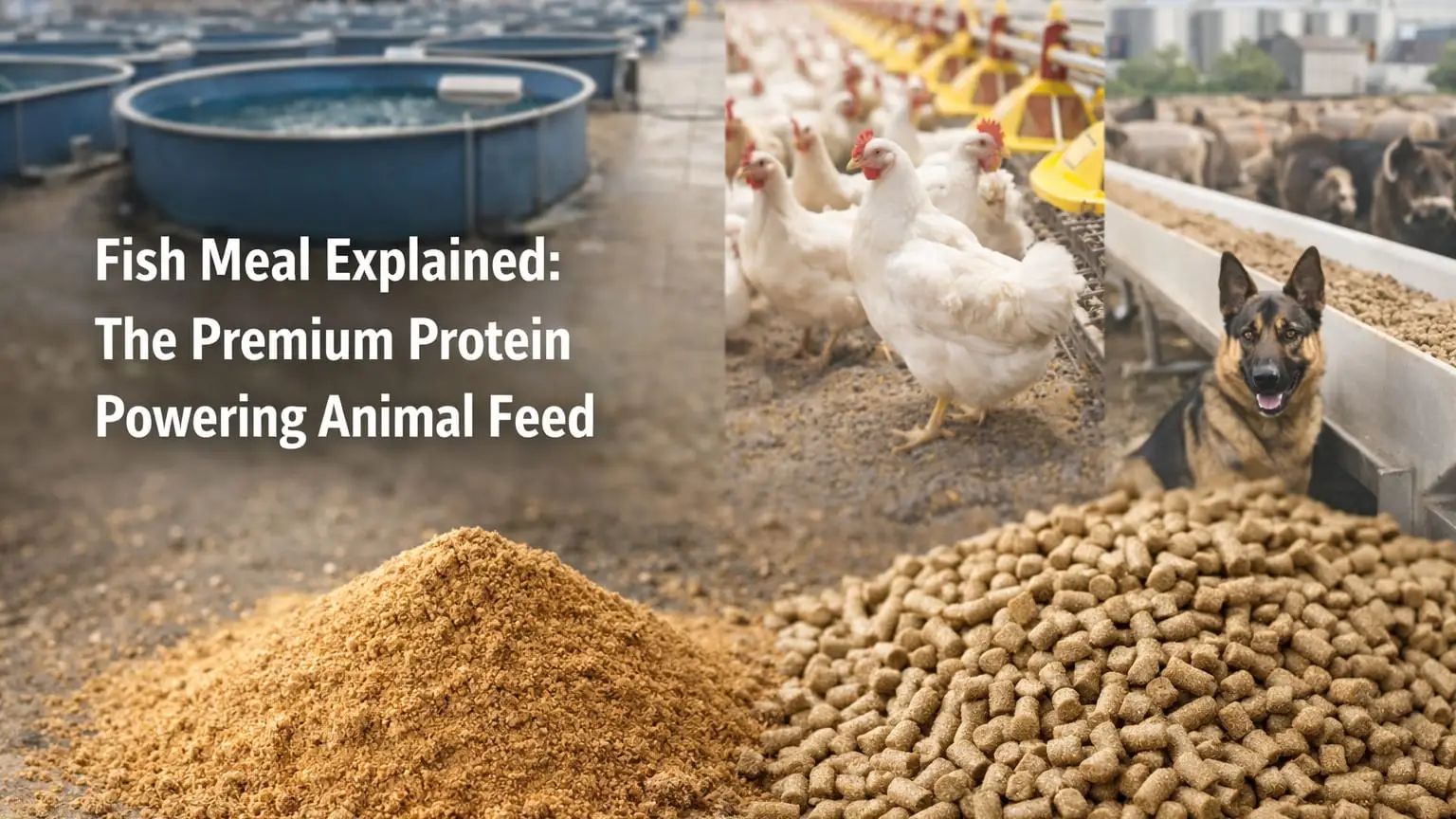
Aquaculture represents the largest global consumer of fish meal and remains the dominant application within the UAE. Marine fish species such as sea bass, sea bream, and cobia, along with shrimp, rely on marine-derived proteins and lipids to meet physiological requirements. Depending on species and production stage, fish meal inclusion levels typically range from 15 to 40 percent in aquafeeds. Higher inclusion rates often apply to carnivorous species and early growth stages.
Poultry feed uses fish meal at lower inclusion rates, often between 2 and 5 percent. Even at these levels, fish meal improves amino acid balance, supports feather development, and can enhance egg nutritional profiles, including omega-3 enrichment.
In swine nutrition, fish meal plays an important role in starter diets for piglets, where digestibility and palatability are critical. Livestock feeds may also include fish meal strategically during growth or recovery phases. The pet food sector uses fish meal as a natural protein and fat source, valued for skin, coat, and digestive health.
Each application leverages specific characteristics rather than relying solely on protein content, which explains why fish meal remains relevant despite the growth of alternative proteins.
Sourcing Fish Meal in the UAE Market
The UAE sources fish meal primarily through imports, with major producing regions including Peru, Chile, Morocco, and Northern Europe. Price volatility remains a characteristic of the global fish meal market due to seasonal fishing patterns, weather events such as El Niño, and competition from livestock feed demand.
For UAE-based buyers, quality consistency often matters more than spot pricing. Batch-to-batch variability can affect feed formulation accuracy and animal performance. Reliable suppliers provide certificates of analysis covering protein, fat, moisture, ash, and freshness indicators such as total volatile nitrogen and histamine. Proper packaging and oxidation control also remain critical in the UAE’s hot climate.
International traders with established supply networks play an important role in mitigating sourcing risk. Platforms such as chemtradeasia.com facilitate access to multiple origins and standardized grades, support documentation requirements, and manage logistics into ports such as Jebel Ali. Working with experienced suppliers helps feed producers maintain consistent formulations while meeting regulatory and operational requirements.
Sustainability and Industry Development
Sustainability has become a defining factor in the fish meal industry. Responsible sourcing from well-managed fisheries, increased use of processing by-products, and certification programs such as MarinTrust and IFFO RS support transparency and environmental stewardship. These measures align with sustainability expectations increasingly reflected in UAE procurement policies and corporate governance standards.
Innovation continues to refine fish meal production. Improved drying technologies preserve amino acid integrity, while specialized products such as protein hydrolysates offer enhanced digestibility and functional benefits. While alternative proteins such as plant concentrates and insect meal continue to develop, fish meal remains a benchmark ingredient due to its balanced nutrient profile and proven biological performance.
Conclusion
Fish meal continues to serve as a high-performance protein ingredient across animal feed sectors, with particular importance for aquaculture development in the United Arab Emirates. Its combination of digestible protein, essential amino acids, marine lipids, vitamins, and minerals supports growth, health, and feed efficiency in ways few alternatives fully replicate.
Understanding production methods, nutritional benefits, application-specific roles, and sourcing considerations allows feed manufacturers and producers to use fish meal strategically rather than generically. By securing consistent quality through reliable supply channels and responsible sourcing practices, UAE stakeholders can strengthen productivity, reduce operational risk, and support national food security objectives.
Fish meal remains a foundational component of modern feed systems, evolving alongside sustainability and innovation while continuing to deliver measurable value across the animal nutrition landscape.
Leave a Comment