Introduction
Global demand for soya lecithin continues to grow as food, pharmaceutical, nutraceutical, and industrial manufacturers rely on it for emulsification, stabilization, and functional performance. From improving chocolate flow and texture to enhancing nutrient delivery in dietary supplements, soya lecithin plays a central role in modern formulations. As usage expands across industries, sourcing this ingredient at scale has become more complex.
Soya lecithin procurement is shaped by agricultural supply cycles, international trade conditions, quality assurance requirements, and evolving regulatory standards. Price volatility, inconsistent quality, logistical disruptions, and sustainability expectations often challenge procurement teams, particularly for companies sourcing across multiple regions. Understanding these hurdles is essential for building a stable and cost-effective supply strategy. This article explores the key challenges in global soya lecithin sourcing and outlines practical approaches for managing supply risk through strategic supplier partnerships.
Understanding Soya Lecithin Types and Applications
Soya lecithin is derived during the degumming stage of soybean oil refining and consists primarily of phospholipids such as phosphatidylcholine, phosphatidylethanolamine, and phosphatidylinositol. Its amphiphilic structure allows it to interact with both oil and water, making it highly effective as an emulsifier and dispersing agent.
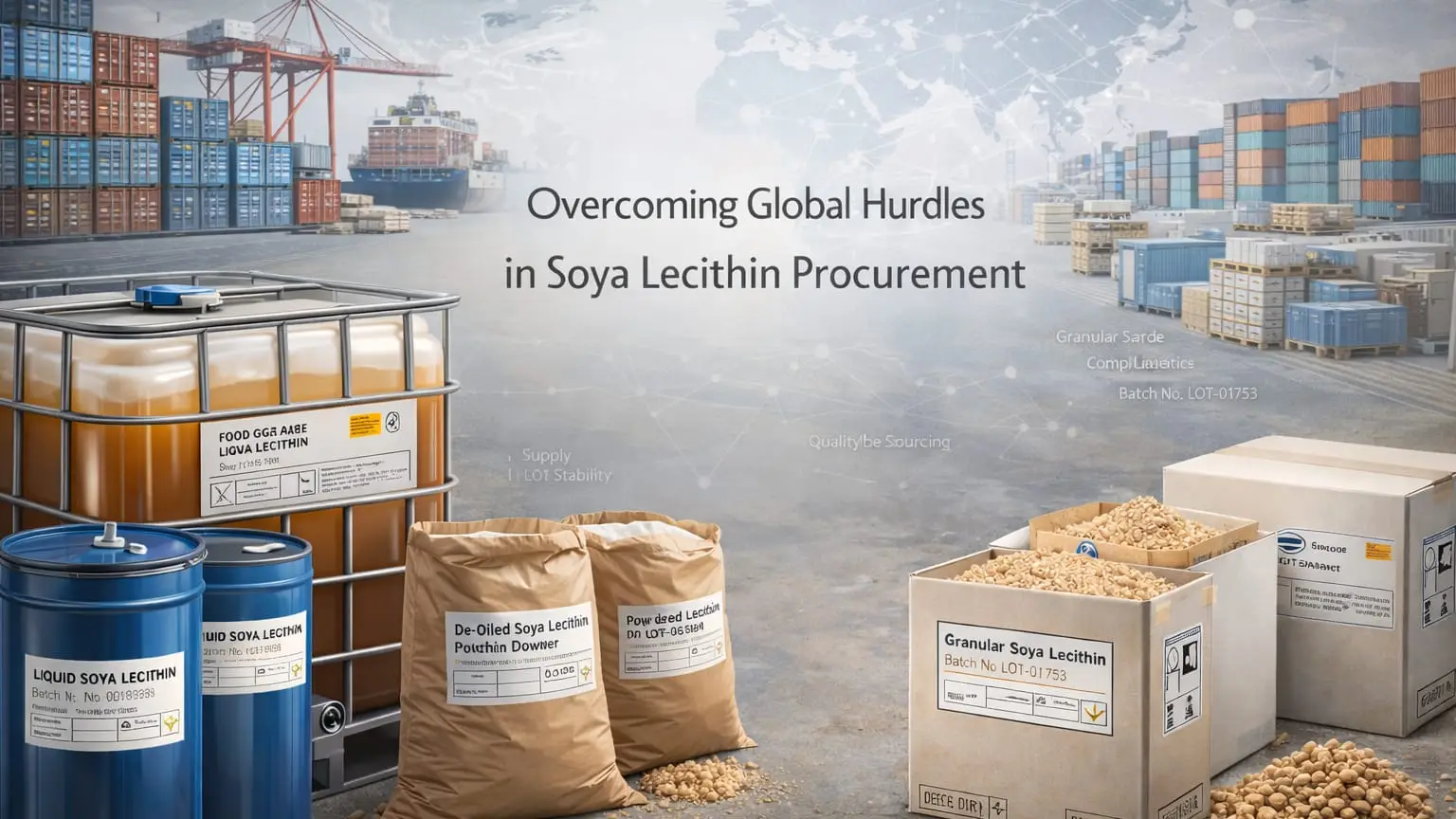
Commercially, soya lecithin is available in several forms. Liquid lecithin remains the most widely used, particularly in chocolate, bakery products, margarine, and instant food applications. De-oiled lecithin powder or granules offer higher phospholipid concentration and improved handling properties, which suit dietary supplements, pharmaceutical capsules, and low-fat formulations. Further refinements include fluidized lecithin for easier dosing and enriched fractions such as phosphatidylcholine for specialized nutraceutical use.
This broad range of applications means procurement requirements vary significantly. Food manufacturers may prioritize emulsification performance and allergen compliance, while pharmaceutical and nutraceutical producers focus on purity, consistency, and regulatory documentation. These differences add complexity to sourcing decisions and supplier selection.
Challenge 1: Price Volatility and Agricultural Market Exposure
Price instability remains one of the most persistent challenges in soya lecithin procurement. As a soybean-derived ingredient, lecithin pricing closely follows global soybean markets. Crop yields in major producing countries such as the United States, Brazil, and Argentina influence raw material availability, while weather conditions, planting cycles, and harvest outcomes affect supply volumes.
Additional pressure comes from competing demand for soybeans in animal feed, biofuel production, and edible oil markets. Trade policies, export restrictions, and geopolitical tensions can also disrupt supply routes and create short-term price spikes. For manufacturers operating on tight margins, these fluctuations complicate budgeting and long-term cost planning.
Effective procurement strategies rely on market awareness rather than spot purchasing. Monitoring agricultural trends, understanding supplier contract structures, and working with distributors that provide pricing visibility can help reduce exposure to sudden market shifts.
Challenge 2: Quality Consistency and Purity Assurance
Quality variation poses another significant risk in soya lecithin sourcing. Functional performance depends on parameters such as phospholipid content, moisture level, acid value, peroxide value, color, and viscosity. Inconsistent quality can affect chocolate tempering, powder flowability, emulsification stability, and shelf life.
Differences often originate from soybean origin, oil extraction methods, and lecithin processing techniques. Solvent-based and physical separation processes yield products with distinct characteristics, which may not perform identically in formulation. Purity concerns further complicate procurement, particularly for food and pharmaceutical applications. Residual solvents, heavy metals, and mycotoxins must remain within strict regulatory limits.
Reliable sourcing requires suppliers with established quality management systems, batch-level traceability, and routine laboratory testing. Consistent documentation, including Certificates of Analysis and compliance statements, helps manufacturers maintain product integrity and meet regulatory obligations.
Challenge 3: Logistics and Supply Chain Disruptions
Transporting soya lecithin across borders introduces logistical challenges that extend beyond standard dry ingredients. Liquid lecithin requires temperature-controlled handling to maintain flow properties, while powdered forms are sensitive to moisture and require appropriate packaging. These factors increase shipping complexity and cost.
Global supply chains have also become more vulnerable to disruption due to port congestion, container shortages, and extended transit times. Delayed shipments can interrupt production schedules and create downstream supply issues for finished products.
Procurement teams increasingly value suppliers with regional stock availability, diversified shipping routes, and strong logistics coordination. Distributors that manage inventory across multiple markets can shorten lead times and provide buffer capacity during periods of disruption.
Challenge 4: Regulatory Compliance and Certification Requirements
Soya lecithin must comply with food and ingredient regulations in each target market. Authorities such as the FDA, EFSA, and regional regulatory bodies set standards covering safety, labeling, and permissible contaminants. Allergen labeling remains particularly important, as soy is classified as a major allergen in many jurisdictions.
Beyond regulatory compliance, many manufacturers require additional certifications such as Halal, Kosher, organic, or pharmaceutical-grade documentation. Each certification involves specific processing controls, audits, and record-keeping requirements. Managing these obligations across multiple markets adds administrative burden and increases sourcing risk if documentation is incomplete or outdated.
Working with suppliers that maintain active certifications and regulatory expertise simplifies compliance and supports smoother market entry for finished products.
Challenge 5: Demand for Sustainable and Non-GMO Lecithin
Sustainability and non-GMO sourcing have become central procurement considerations rather than optional attributes. Brand owners increasingly seek identity-preserved lecithin produced from non-GMO soybeans and supported by recognized sustainability schemes such as RTRS or ProTerra.
Supply of certified non-GMO and sustainably sourced lecithin remains more limited than conventional grades. Maintaining segregation throughout the supply chain requires dedicated processing facilities and strict traceability controls, which increases cost and narrows supplier options. Verifying claims through audit reports and chain-of-custody documentation remains essential.
For procurement teams, balancing sustainability commitments with cost and availability requires close collaboration with suppliers that maintain long-term relationships with certified soybean processors.
Strategic Supplier Partnerships in Lecithin Procurement
Addressing the challenges of soya lecithin procurement often depends on the strength of supplier relationships. Strategic distributors play a key role by connecting buyers with qualified manufacturers, managing documentation, and providing market insight that supports informed purchasing decisions.
Global suppliers such as Chemtradeasia support food and pharmaceutical manufacturers by offering access to multiple lecithin grades, including liquid, de-oiled, non-GMO, and application-specific variants. Through established sourcing networks and regional logistics capabilities, Chemtradeasia helps reduce supply risk while maintaining consistent quality and regulatory compliance. For companies operating across Asia-Pacific and other import-dependent regions, working with an experienced distributor supports continuity and procurement efficiency.
Conclusion
Global soya lecithin procurement involves far more than securing a competitive price. Agricultural market volatility, quality assurance requirements, logistical constraints, regulatory compliance, and sustainability expectations all influence sourcing outcomes. Without a structured approach, these factors can disrupt production and undermine product performance.
A resilient procurement strategy prioritizes transparency, supplier capability, and long-term partnership. By working with established global suppliers such as Chemtradeasia, manufacturers gain access to stable supply, technical support, and regulatory confidence. This approach allows procurement teams to manage risk more effectively and supports consistent product quality in an increasingly complex global ingredient market.
Leave a Comment