
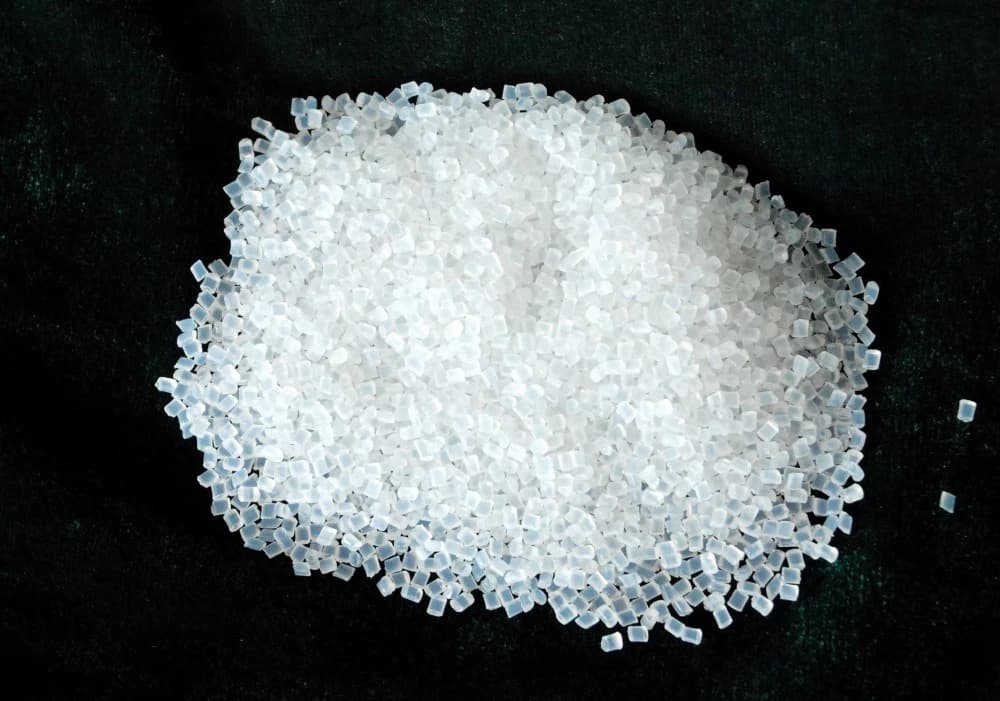
Nylon 6
- IUPAC Name
- poly(azepan-2-one)
- Molecular Formula
- (C6H11NO)n
- Synonyms & Trade Names
- Nylon 6; Polyamide 6; Polycaprolactam; PA6
- Purity / Assay (%)
- Polymer grade
- Grade / Quality Level
- Industrial Grade
- Physical Form
- Solid
Categories
Technical Document
Brief Overview
Nylon 6 is a synthetic polyamide material that is widely used in various industries due to its exceptional strength, durability, and versatility. It is made by polymerizing 6-aminohexanoic acid, which forms a repeating unit in the polymer chain. Nylon 6 is known for its excellent resistance to abrasion, chemicals, and UV radiation, and it also has low moisture absorption. These properties make it useful in a wide range of applications such as gears, bearings, machine parts, ropes, fishing nets, and outdoor fabrics. Nylon 6 can be blended with other materials to create composites with unique properties, or it can be used as a feedstock for 3D printing. Overall, Nylon 6 is a highly valued material due to its strength, durability, and versatility, making it a popular choice for many industrial and commercial applications.
Manufacturing Process
Polymerization: The first step is the polymerization of caprolactam. This is achieved by heating the caprolactam to around 270-280°C in the presence of a catalyst. This causes the caprolactam molecules to react with each other, forming long chains of Nylon 6.
Extrusion: The Nylon 6 polymer is then extruded through a spinneret to form long fibers. The spinneret is a small device that has numerous holes in it, and the polymer is forced through these holes to create the fibers.
Drawing: The extruded fibers are then stretched or "drawn" to align the polymer chains in the fibers. This increases the strength and durability of the nylon.
Heat Setting: The drawn fibers are then heat set, or annealed, by heating them to around 200°C for a period of time. This process helps to stabilize the fibers and prevent them from shrinking or stretching.
Cutting and Spinning: The heat-set fibers are then cut into shorter lengths and spun into yarns. These yarns can be further processed into a variety of different products, such as textiles, carpets, and industrial fibers.