
Regional Trade Flows: US Gulf Chemical Exports Finding New Markets as Middle East Supply Disrupted
Global chemical trade routes are undergoing a noticeable reshuffle as disruptions in Middle Eastern supply chains push buyers to look elsewhere for reliable feedstock. One of the biggest beneficiaries of this shift is the U.S. Gulf Coast, which is increasingly positioning itself as a flexible exporter of key petrochemicals and industrial chemical intermediates.
What is emerging is not a temporary rerouting—but a regional trade rebalancing, where US Gulf exports are filling supply gaps in Asia, Latin America, and parts of Europe.
Why Middle East Disruption Matters
The Middle East has long been a cornerstone of global chemical supply due to:
Low-cost feedstock (natural gas and oil derivatives)
Large-scale petrochemical complexes
Strong export-oriented production capacity
However, recent disruptions—ranging from logistical constraints to geopolitical risk exposure and periodic plant outages—have reduced the consistency of supply in certain product categories.
This has created uncertainty for import-dependent markets, especially in Asia, where chemical demand growth remains strong.
US Gulf: The Alternative Supply Engine
The U.S. Gulf Coast is stepping into this gap with strong export availability in:
Ethylene derivatives
Methanol
MEG (Monoethylene Glycol)
Caustic soda
Aromatics and solvents
Key advantages driving competitiveness include:
Abundant shale gas-based feedstock
Expanding export terminal infrastructure
Strong integration with global shipping lanes
Flexible contract structures (spot + term blend)
As a result, U.S. Gulf exporters are increasingly seen as “disruption-resilient suppliers”.
Trade Flow Shift: Where the Cargo Is Going
The rerouting of chemical trade flows is becoming more visible across regions:
Asia: Fastest Growing Replacement Market
Asian buyers—especially in China, India, and Southeast Asia—are increasing imports of U.S. Gulf chemicals due to:
Middle East supply volatility
Competitive U.S. pricing in select cycles
Reliability of shipment scheduling
Latin America: Structural Dependence Increasing
Latin American buyers are deepening ties with U.S. Gulf suppliers because of:
Shorter shipping distance
Established trade agreements
Stable contract relationships
Europe: Opportunistic Spot Buying
Europe is selectively sourcing U.S. Gulf cargo during Middle East supply gaps, particularly for:
Industrial intermediates
Energy-linked chemical inputs
However, longer transit times limit full-scale substitution.
Freight Market Impact: Longer Voyages, Higher Utilization
This trade shift is also reshaping shipping dynamics.
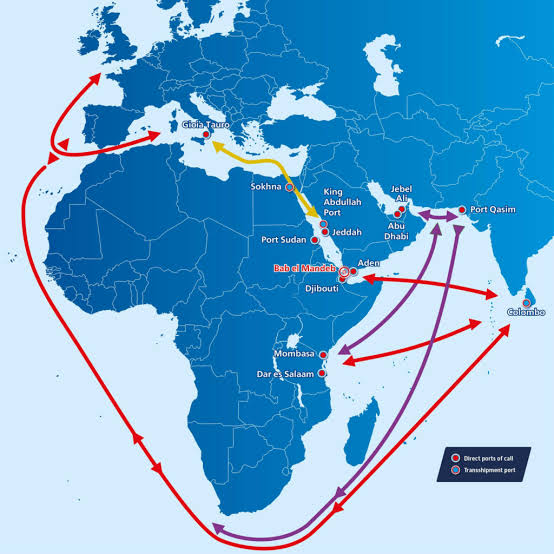
U.S. Gulf exports to Asia require:
Longer voyage durations via Panama Canal or Cape routes
Higher ton-mile demand for tankers and containers
Increased vessel absorption despite stable global demand
This leads to a key market pattern:
Freight utilization rises even when global chemical consumption remains flat.
Pricing Dynamics: Arbitrage Windows Opening
Supply disruption in the Middle East has created pricing gaps that U.S. exporters are exploiting:
Spot price premiums appear in Asia during shortage cycles
Arbitrage opportunities emerge between Gulf and Middle East-origin cargo
Buyers increasingly diversify sourcing to reduce price volatility
However, these windows are often short-lived due to rapid market rebalancing.
Structural Shift: From Regional Dominance to Shared Supply System
Historically, the Middle East dominated cost leadership in bulk petrochemicals. But the current environment is moving toward a more distributed model:
Middle East → cost-efficient but less stable supply
U.S. Gulf → higher flexibility and reliability
Asia → demand anchor and price absorber
This creates a multi-origin supply system, where no single region fully controls global chemical flows.
Strategic Behavior from Buyers
Global chemical buyers are adjusting procurement strategies:
1. Dual Sourcing Models
Companies are splitting contracts between Middle East and U.S. Gulf suppliers.
2. Shorter Contract Cycles
Long-term dependence is decreasing in favor of flexible quarterly or spot-linked agreements.
3. Inventory Buffering
Asian buyers are increasing safety stock to reduce exposure to supply shocks.
Outlook: U.S. Gulf as a Stability Provider
If Middle East disruptions persist intermittently, the U.S. Gulf Coast is likely to strengthen its position as:
A balancing supplier for global chemical markets
A reliability-driven alternative during supply shocks
A key arbitrage hub for global traders
However, this also means increased exposure to:
Freight volatility
Longer logistics chains
Greater sensitivity to global shipping disruptions
Conclusion
The current shift in chemical trade flows is not just about replacing one supplier with another—it is about rebuilding global chemical supply resilience.
As Middle East supply disruptions continue to create uncertainty, the U.S. Gulf Coast is emerging as a critical stabilizer in the global chemical network.