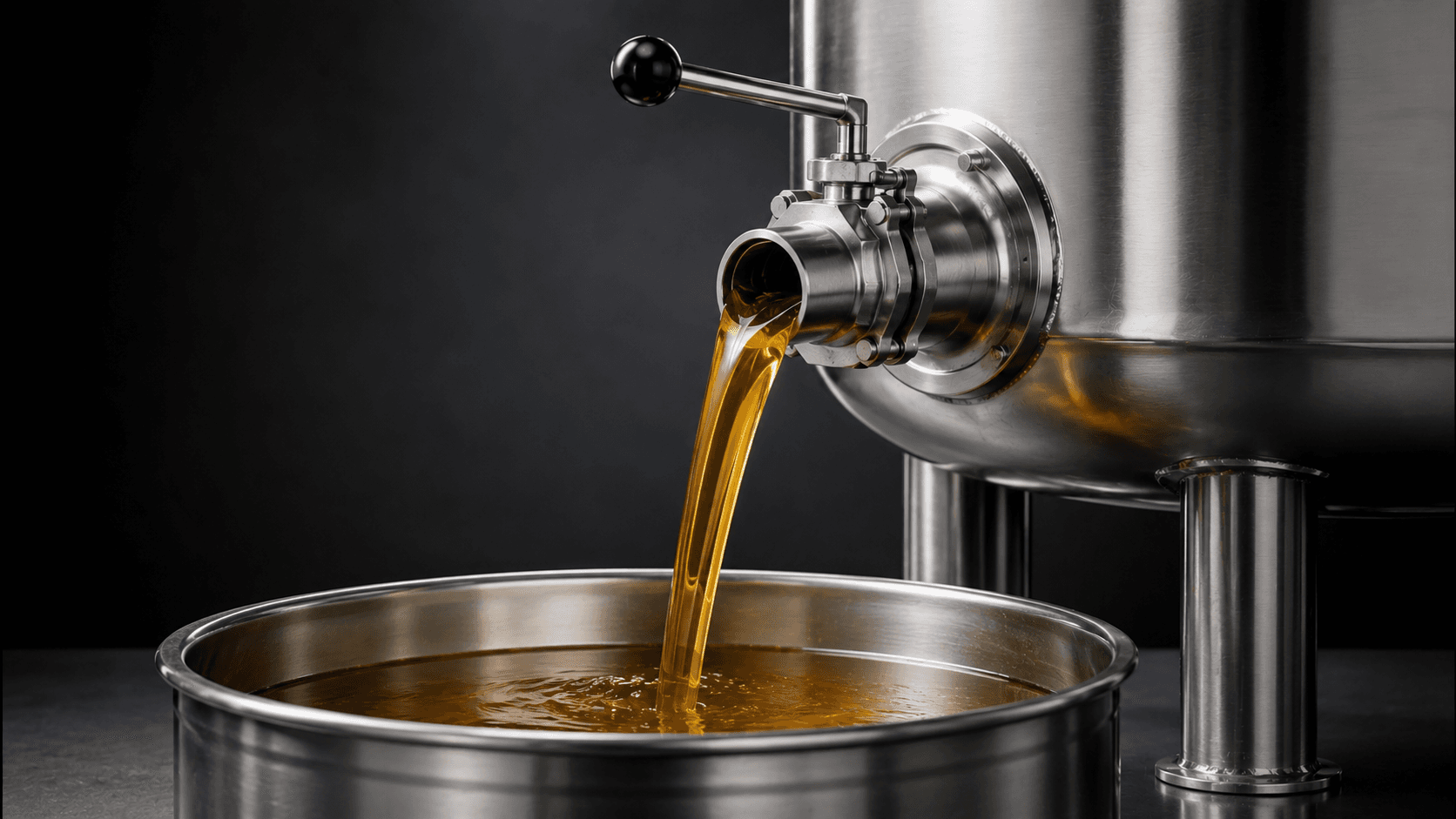
Cost pressure continues to reshape sourcing decisions across the oleochemical sector. As manufacturers seek alternatives to higher-priced refined fatty acids, Palm Fatty Acid Distillate (PFAD) is gaining greater attention as a versatile and economical feedstock.
Derived during crude palm oil refining, PFAD occupies a unique position in the value chain. It offers access to valuable fatty acid content at a significantly lower cost than many refined alternatives, making it particularly attractive for soap producers, biodiesel manufacturers and oleochemical processors focused on maintaining competitive production economics.
Understanding PFAD and Its Role in the Palm Oil Value Chain
PFAD emerges as a by-product during the physical refining of crude palm oil. During deodorization, volatile compounds and free fatty acids separate from the refined edible oil stream, creating PFAD.
Although classified as a refining by-product, PFAD contains valuable components that support a wide range of industrial applications.
Typical composition includes:
High levels of free fatty acids.
Significant concentrations of palmitic acid.
Valuable oleic acid content.
Minor quantities of glycerides and unsaponifiable matter.
This composition allows processors to extract economic value while reducing overall raw material costs.
Why PFAD Is Becoming More Attractive to Buyers
The primary advantage of PFAD lies in its pricing structure. Compared with refined fatty acids and specialty oleochemical feedstocks, PFAD typically offers substantial cost savings.
As feedstock inflation affects global chemical markets, many manufacturers are reassessing raw material strategies. PFAD provides an opportunity to reduce input costs without abandoning palm-based feedstock supply chains.
Several factors contribute to its growing popularity:
Competitive pricing relative to refined fatty acids.
Broad availability from major palm oil refining regions.
Compatibility with multiple industrial processes.
Strong demand across diverse downstream industries.
For procurement managers, PFAD often represents one of the most economical entry points into the palm-based oleochemical market.
PFAD Price Trends Reflect Growing Demand
Market pricing during late 2025 demonstrated strengthening demand fundamentals.
In Malaysia, PFAD prices generally ranged between USD 980 and USD 1,040 per metric ton during the fourth quarter of 2025. The market recorded an upward trend of approximately 6.25%, reflecting steady buying interest and healthy downstream consumption.
Indonesia also maintained competitive pricing. FOB Jakarta quotations generally ranged from USD 915 to USD 957 per metric ton, reinforcing the country's position as a major source of cost-effective supply.
The pricing gap between PFAD and refined fatty acids continues to attract buyers seeking margin protection in challenging market conditions.

Soap Manufacturing Remains a Key Demand Driver
One of the largest applications for PFAD remains soap production.
Soap manufacturers continuously balance product quality requirements with raw material costs. PFAD provides an attractive solution because its fatty acid content contributes to soap-making processes while helping reduce formulation expenses.
Benefits for soap and detergent manufacturers include:
Lower feedstock costs.
Improved production economics.
Reliable regional availability.
Compatibility with various soap formulations.
For cost-sensitive markets, PFAD-based formulations can provide important competitive advantages without significantly increasing manufacturing complexity.
Biodiesel Demand Continues to Support Market Growth
The biodiesel industry has become another important consumer of PFAD.
Many biodiesel producers seek lower-cost feedstocks to improve operating margins and maintain competitiveness against fossil fuel alternatives. PFAD's availability and chemical characteristics make it suitable for biodiesel production in numerous markets.
Demand from renewable fuel programs contributes to:
Strong baseline consumption.
Improved market liquidity.
Greater utilization of palm oil refining by-products.
Additional support for long-term pricing stability.
As renewable energy initiatives continue expanding globally, PFAD demand from biodiesel producers may remain a significant market driver.
Oleochemical Producers See PFAD as a Strategic Feedstock
Beyond soap and biodiesel applications, PFAD plays an important role in oleochemical manufacturing.
Producers use PFAD as a feedstock for products including:
Stearic acid.
Glycerin.
Fatty acid derivatives.
Industrial surfactants.
Specialty chemical intermediates.
The economic advantage becomes particularly attractive when refined fatty acid prices rise rapidly. Manufacturers can improve cost efficiency while maintaining access to essential fatty acid streams.

Supply Outlook Remains Supported by Palm Oil Processing Volumes
Unlike some specialty chemical feedstocks that face capacity limitations, PFAD availability depends largely on crude palm oil refining activity.
Strong palm oil production and refining volumes in Southeast Asia continue to support supply availability. As long as refining operations remain active, PFAD generation will continue alongside edible oil production.
Supply-side advantages include:
Established refining infrastructure.
Large-scale production capacity.
Consistent generation from refining operations.
Strong export capabilities from Indonesia and Malaysia.
These factors help create a relatively stable supply environment compared with certain specialty oleochemical feedstocks.
Risks Buyers Should Still Monitor
Despite positive fundamentals, procurement teams should not assume PFAD pricing will remain static.
Several factors can influence market conditions:
Changes in crude palm oil prices.
Biodiesel policy adjustments.
Export regulations in producing countries.
Logistics and shipping costs.
Weather-related disruptions affecting palm harvests.
Because PFAD remains closely connected to the broader palm oil sector, developments affecting palm supply chains often influence PFAD availability and pricing.

What Procurement Teams Should Watch in 2026
The outlook for PFAD remains constructive as manufacturers continue searching for cost-efficient feedstocks. Competitive pricing, healthy supply generation and diversified demand across multiple industries support a favorable market environment.
Procurement teams evaluating PFAD should focus on supplier reliability, feedstock quality specifications and long-term pricing trends linked to crude palm oil markets. Buyers that establish relationships with reputable suppliers and monitor palm industry developments closely will be better positioned to capture the economic advantages PFAD offers.
As oleochemical producers, soap manufacturers and biodiesel companies continue prioritizing cost optimization, PFAD appears likely to strengthen its role within global industrial supply chains.
Ready to source Palm Fatty Acid Distillate (PFAD) from verified global suppliers? Explore competitive offers on our platform today.
Lauric Acid 70% Min CAS: 0143-07-07