
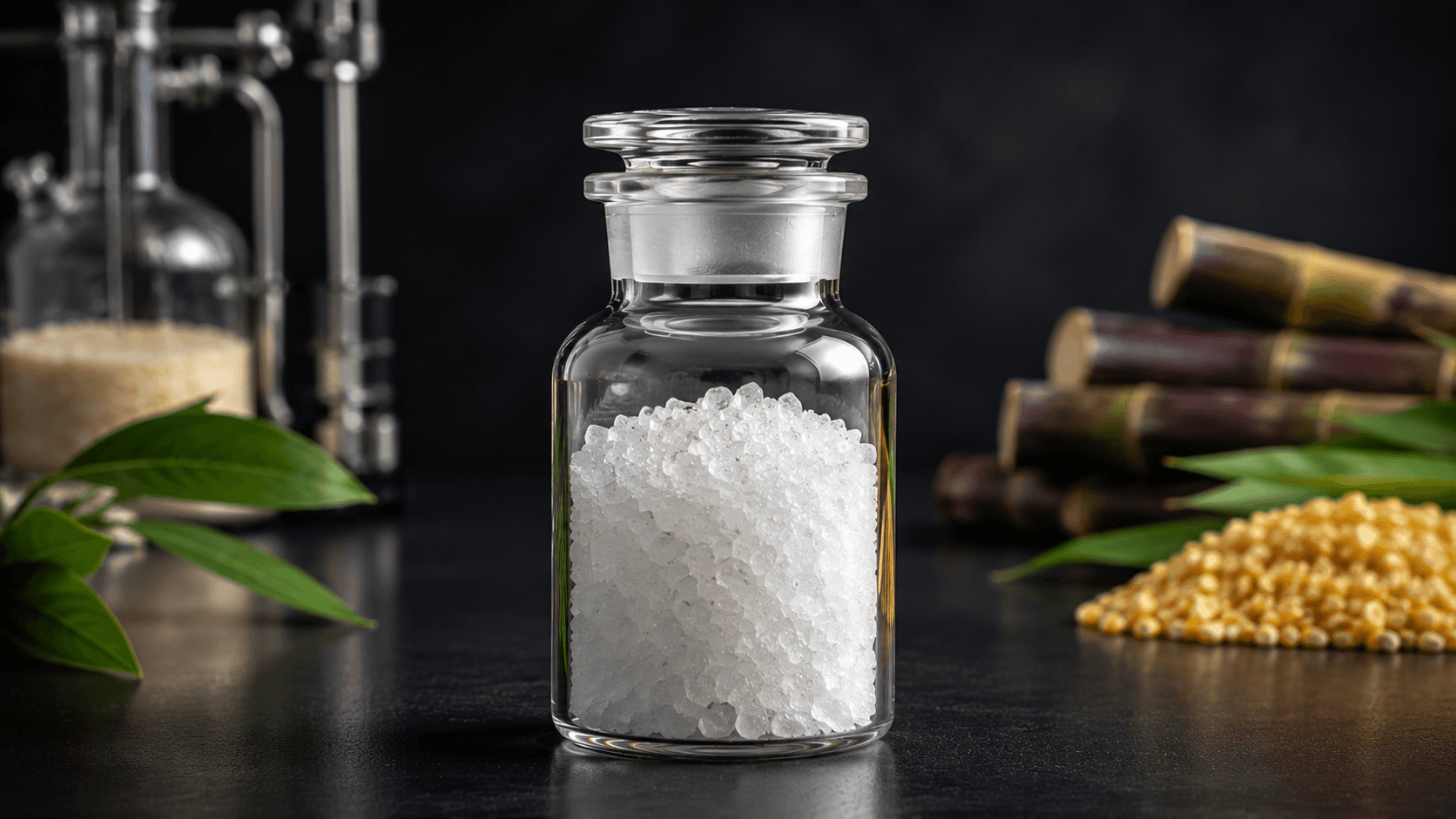
The chemical industry's transition toward renewable feedstocks has created growing interest in a group of materials known as platform chemicals. Among them, succinic acid has emerged as one of the most versatile and commercially promising.
Traditionally produced from petrochemical feedstocks, succinic acid is increasingly being manufactured through biological fermentation processes using renewable raw materials. This shift is positioning bio-based succinic acid as a strategic building block for biodegradable plastics, pharmaceutical ingredients, specialty chemicals and sustainable industrial products.
As governments and brands pursue lower-carbon supply chains, the market outlook for bio-based succinic acid continues to strengthen.
Understanding Succinic Acid Production Pathways
Succinic acid is a four-carbon dicarboxylic acid used throughout the chemical industry.
Commercial production currently follows two primary routes.
Petroleum-Based Production
Traditional succinic acid production relies on petrochemical feedstocks, particularly maleic anhydride. This remains the dominant production method in many regions, with China maintaining a significant position in global supply.
Bio-Based Production
Bio-based succinic acid is produced through fermentation processes using renewable feedstocks such as:
Glucose.
Sucrose.
Agricultural carbohydrates.
Biomass-derived sugars.
Engineered microorganisms convert these renewable feedstocks into succinic acid under controlled fermentation conditions.
This production route offers a pathway toward lower-carbon chemical manufacturing while reducing dependence on fossil-derived raw materials.
Why Bio-Based Succinic Acid Is Attracting Attention
Unlike many renewable chemicals that serve niche applications, succinic acid can participate in multiple high-growth value chains.
Its versatility makes it attractive for manufacturers seeking sustainable alternatives without sacrificing functionality.
Key advantages include:
Renewable feedstock origin.
Broad industrial applicability.
Compatibility with biodegradable polymers.
Reduced dependence on petrochemicals.
Support for sustainability targets.
These characteristics have made succinic acid one of the most closely watched platform chemicals in green chemistry.
PBS Bioplastics Are a Major Growth Driver
One of the most important applications for bio-based succinic acid is the production of Polybutylene Succinate (PBS).
PBS is a biodegradable polyester increasingly used in sustainable packaging and agricultural applications.
Growing demand is being supported by:
Restrictions on conventional plastics.
Sustainable packaging initiatives.
Agricultural film applications.
Consumer preference for biodegradable materials.
Corporate environmental commitments.
As biodegradable materials gain market share, demand for bio-based succinic acid feedstocks is expected to increase accordingly.

Pharmaceutical and Food Applications Provide Additional Demand
While bioplastics receive considerable attention, succinic acid also serves several mature and stable industries.
In pharmaceuticals, it is used as an intermediate in the synthesis of various active ingredients and specialty compounds.
Additional applications include:
Pharmaceutical intermediates.
Food additives.
Nutritional formulations.
Specialty chemical production.
Personal care ingredients.
This diversified demand base helps support market growth beyond the biodegradable plastics sector.
The Strategic Importance of the BDO Connection
One of the most important market relationships involves 1,4-Butanediol (BDO).
Succinic acid can be converted into BDO, which serves as a key intermediate for numerous polymers and specialty chemicals.
The value chain typically follows:
Succinic Acid.
BDO.
Engineering plastics.
Polyurethanes.
Specialty chemical products.
Because of this connection, developments in the BDO market often influence succinic acid economics and investment decisions.
For procurement teams, monitoring BDO market conditions can provide valuable insight into future succinic acid demand trends.
Bio-Based Producers Helped Pioneer the Market
Several companies played important roles in advancing commercial bio-based succinic acid technology.
Notable pioneers included:
BioAmber
Myriant
Roquette-DSM
These organizations demonstrated the technical feasibility of fermentation-based succinic acid production and helped establish the foundation for future industry growth.
Although market structures have evolved over time, their early investments accelerated commercial adoption of bio-based pathways.
EU Sustainability Policies Are Supporting Demand
European sustainability initiatives continue to create opportunities for renewable chemicals.
Policies promoting bio-based materials in packaging and agricultural applications are encouraging manufacturers to evaluate alternative feedstocks.
These trends support succinic acid demand because it enables:
Renewable polymer production.
Lower-carbon material solutions.
Compliance with sustainability objectives.
Reduced reliance on fossil-derived chemicals.
As regulatory requirements become more ambitious, demand for renewable intermediates is expected to expand.
Trade Dynamics Still Matter
Despite growth in bio-based production, petroleum-based succinic acid remains an important part of the market.
China continues to dominate conventional succinic acid production, making international trade dynamics highly relevant for buyers.
Because succinic acid is linked to BDO value chains, procurement teams should also monitor:
Anti-dumping investigations.
Trade policy developments.
Chinese export availability.
Feedstock economics.
Regulatory changes affecting sustainable materials.
These factors can influence pricing and sourcing strategies across both conventional and bio-based supply chains.
What Procurement Teams Should Watch Through 2030
The future of succinic acid will largely depend on the balance between sustainability-driven demand growth and the industry's ability to expand commercial production capacity.
Key market indicators include:
PBS bioplastic adoption.
BDO market developments.
Bio-based packaging regulations.
Agricultural film demand.
Fermentation technology advancements.
Chinese supply conditions.
Organizations that monitor both renewable materials policies and traditional petrochemical markets will be best positioned to navigate future opportunities.
The Bottom Line for Buyers
Bio-based succinic acid represents one of the clearest examples of how biotechnology is reshaping the chemical industry. By converting renewable sugars into a versatile platform chemical, manufacturers can support applications ranging from biodegradable plastics and pharmaceuticals to specialty chemicals and sustainable packaging.
As demand for renewable materials accelerates and bio-based content requirements expand, succinic acid is likely to play an increasingly important role in future supply chains. For procurement teams, understanding the links between fermentation technology, PBS plastics, BDO markets and regulatory developments will be essential for making informed sourcing decisions.
Ready to source succinic acid from verified global suppliers? Explore competitive offers on our platform today.
Sulphuric Acid (60%) CAS: 7664-93-9