
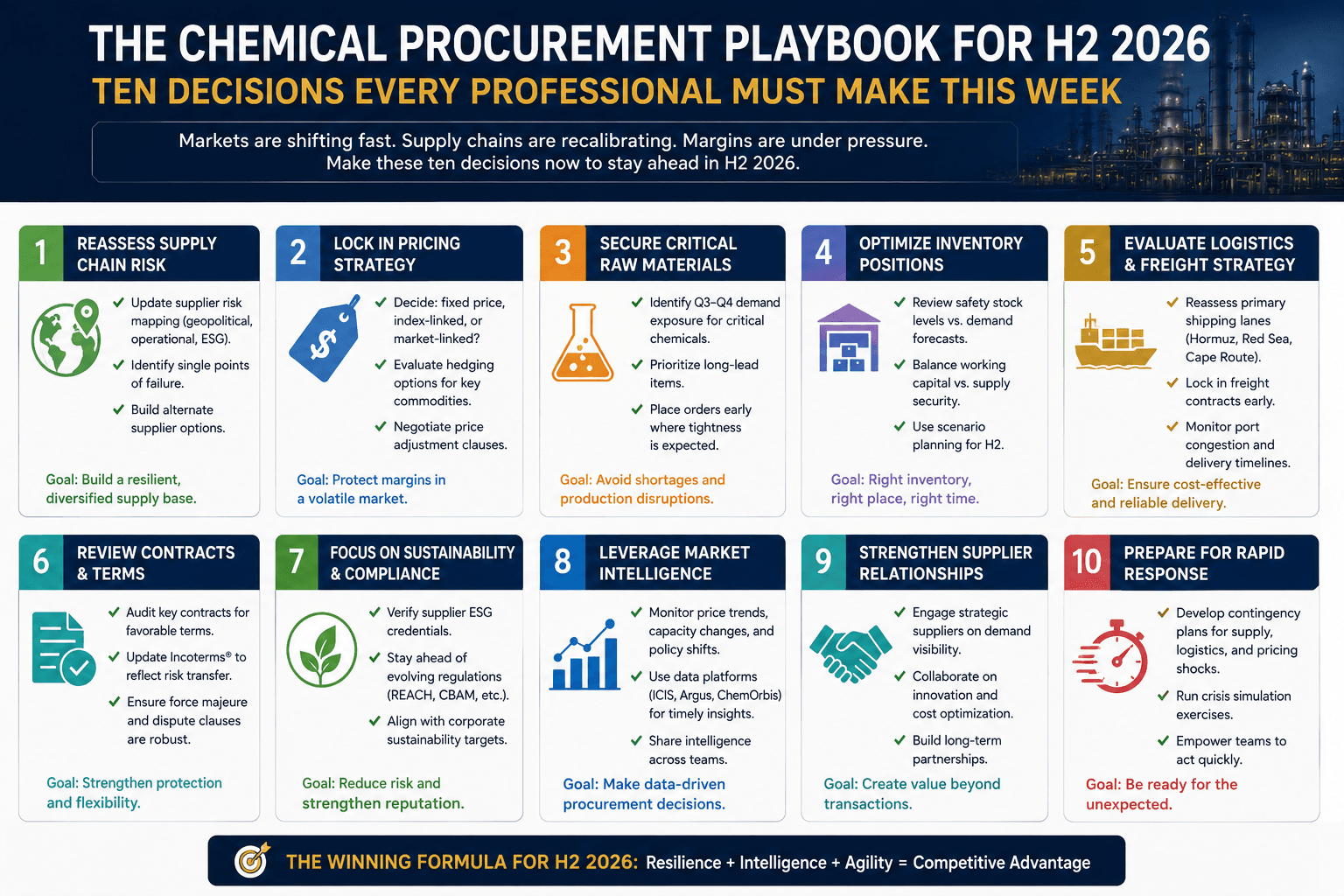
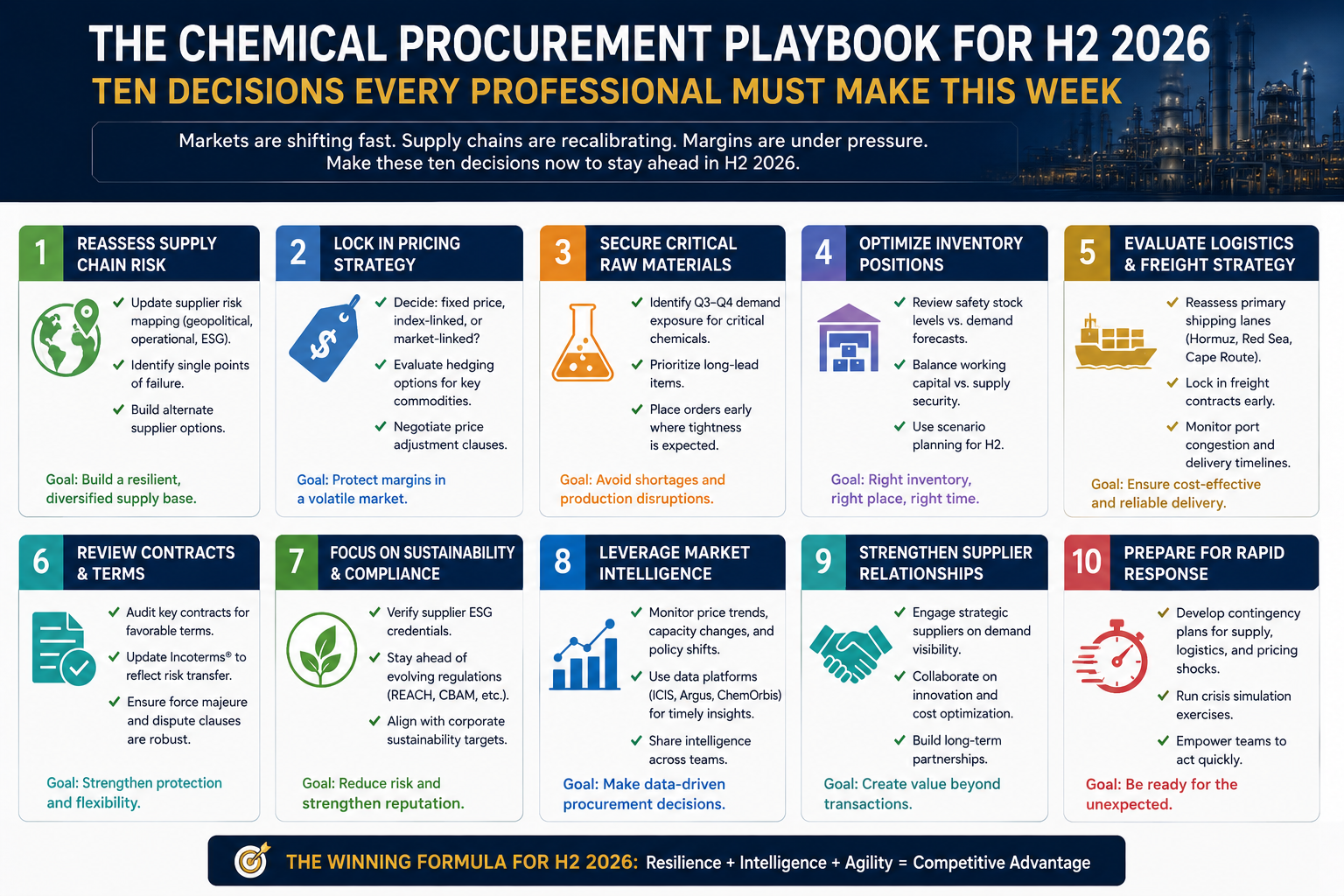
Related Insights

Green Ammonia: The 60-Day MoU Clock and What It Means for Gulf Green Project Timelines
The 60-day diplomatic window following the June 2026 MoU is becoming a key milestone for green ammonia investments. Developers and industrial buyers are closely monitoring project timelines, supply security, and future procurement opportunities.
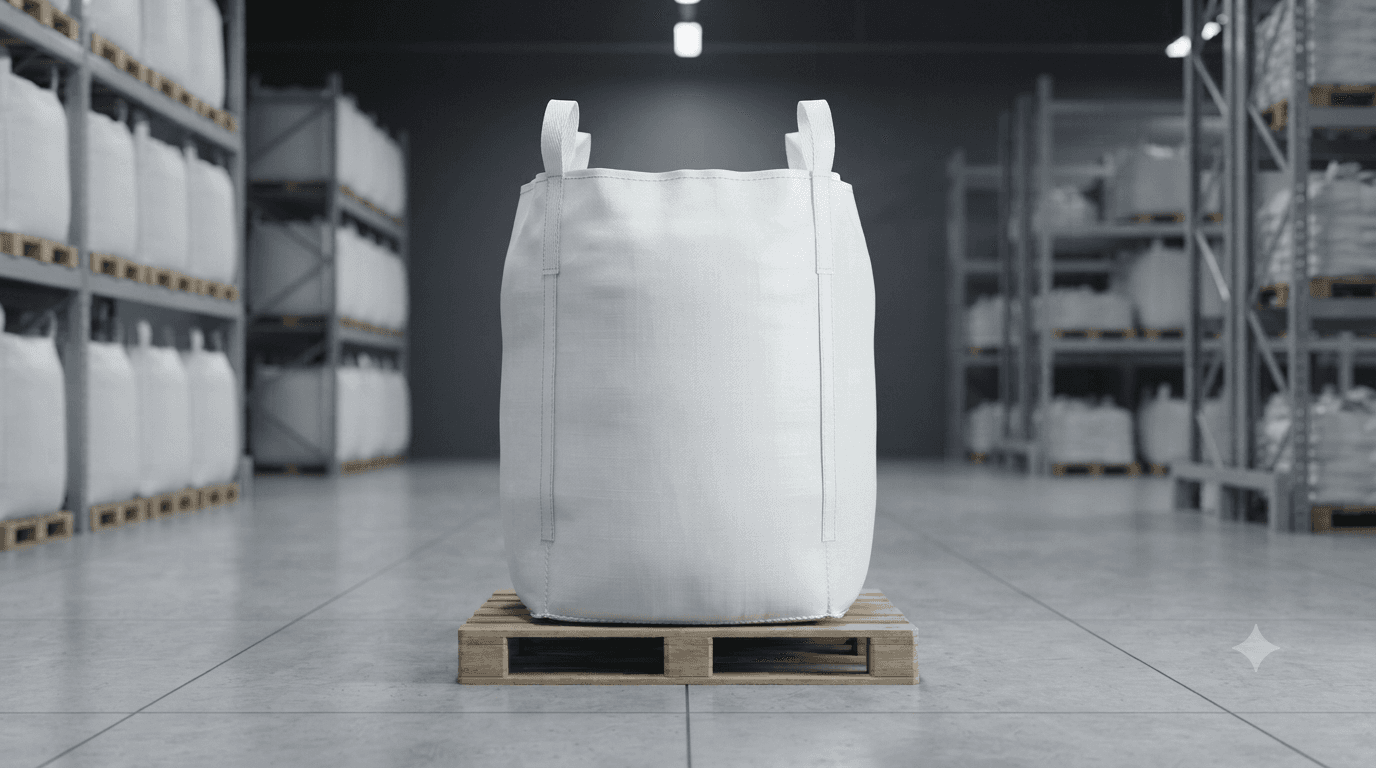
Tropical Storm Arthur and Gulf Coast Chemical Disruption: What It Means for Corn Starch, Glucose and Dextrose Supply
Tropical Storm Arthur has renewed attention on Gulf Coast supply chain risk just as the 2026 Atlantic hurricane season begins. Find out how refinery shutdowns, logistics disruptions and weather uncertainty could affect procurement strategies for corn starch, glucose and dextrose buyers during the second half of 2026.
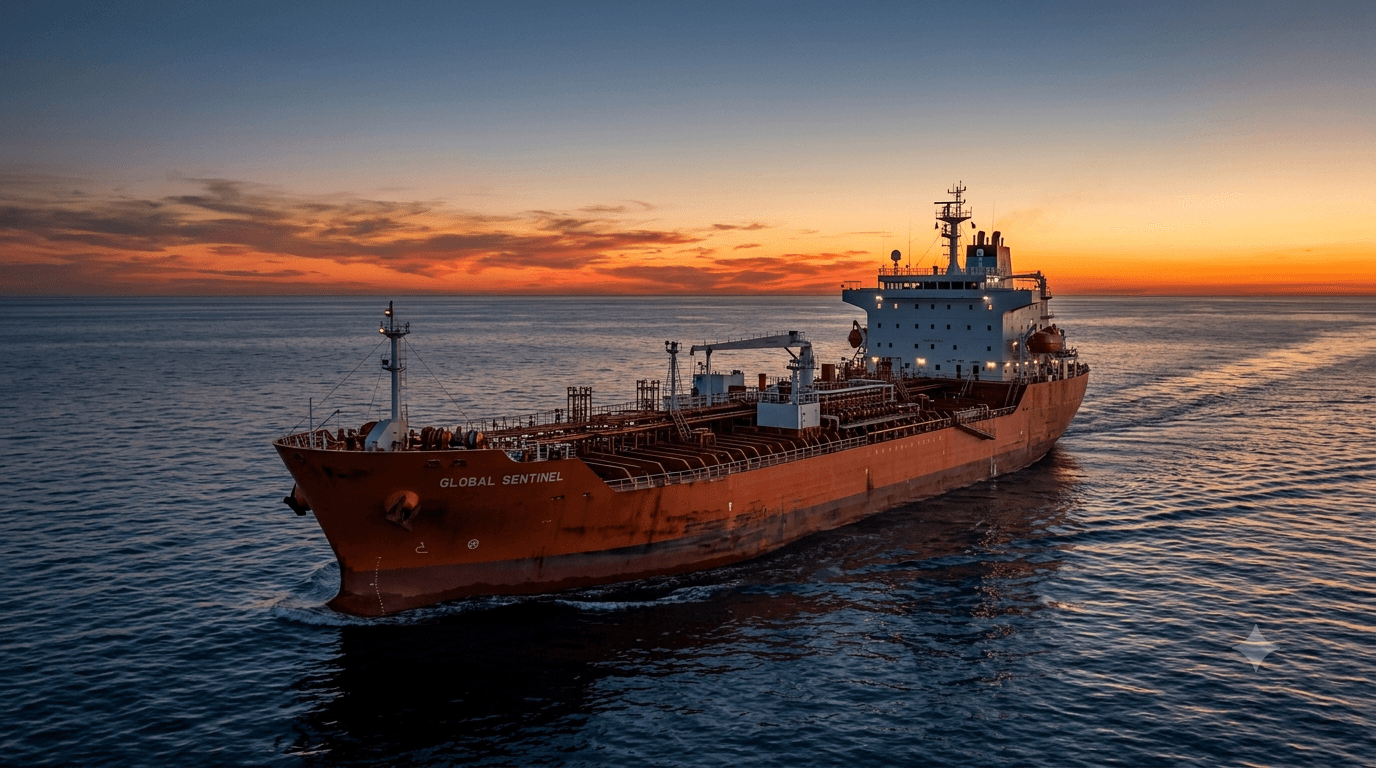
War Risk Insurance for Hormuz Transits: Why Premiums Remain High Despite Supply Recovery in H1 2026
War risk insurance has become one of the biggest cost drivers for Gulf chemical shipments in H1 2026. This review explains why premiums remain elevated even as physical exports recover and what procurement teams should expect during H2 2026.

MSG and Umami: Mid-Year Supply Chain Review as Fufeng and Meihua Prepare H2 Pricing
The global MSG market enters a critical procurement period as major Chinese producers prepare their second half of 2026 pricing. Freight costs have eased, feedstock conditions remain favorable and buyers have a limited window to secure competitive contracts before new price schedules take effect.
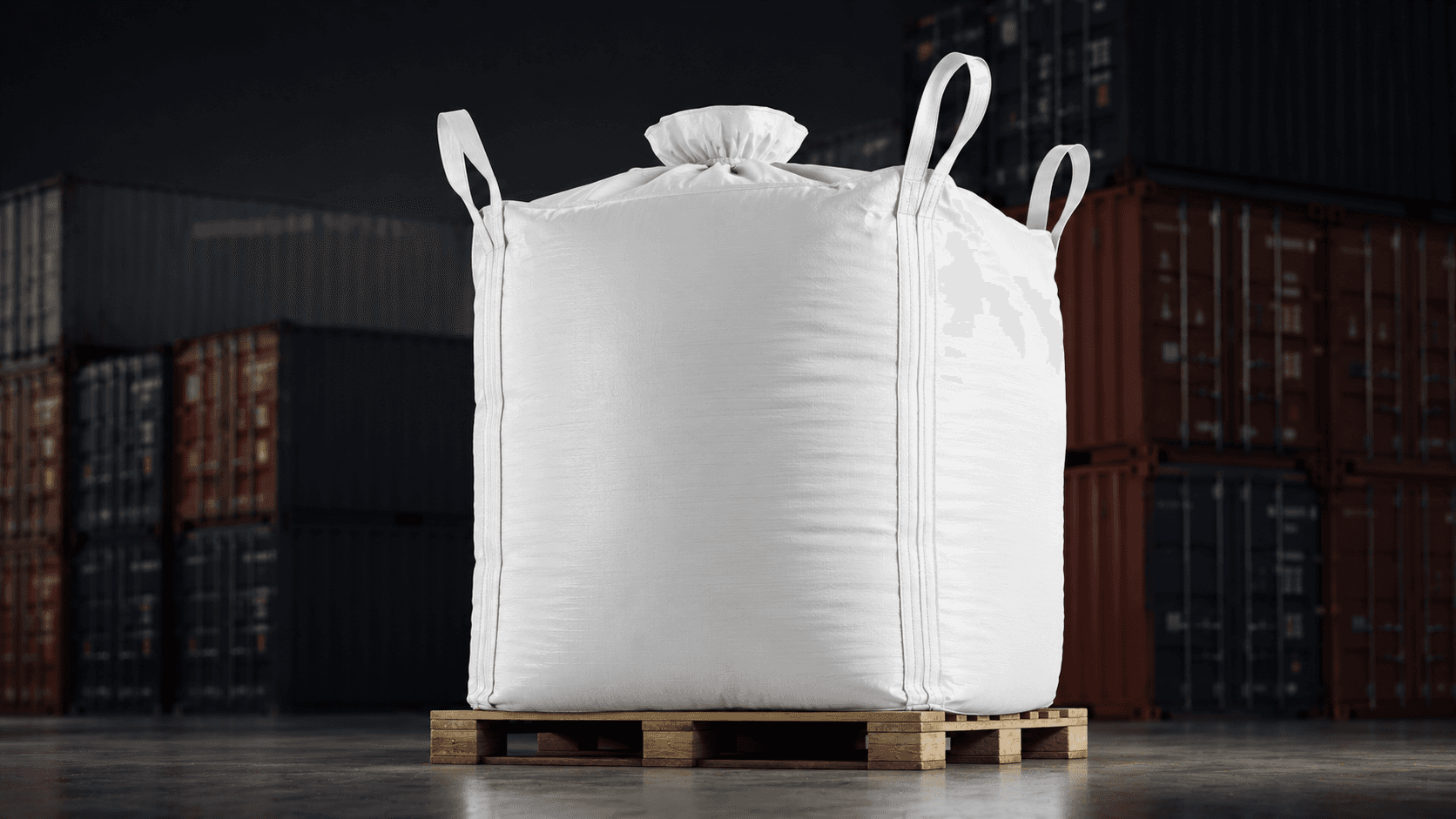
Food Ingredient Freight Reset: Brent Below Pre-War Levels Opens the H2 2026 Cost Correction Window
Brent crude has returned to pre-war levels, creating a new opportunity for food ingredient buyers to reduce landed costs. July freight adjustments give procurement teams a timely chance to renegotiate contracts across major sourcing regions including China, Southeast Asia and India.
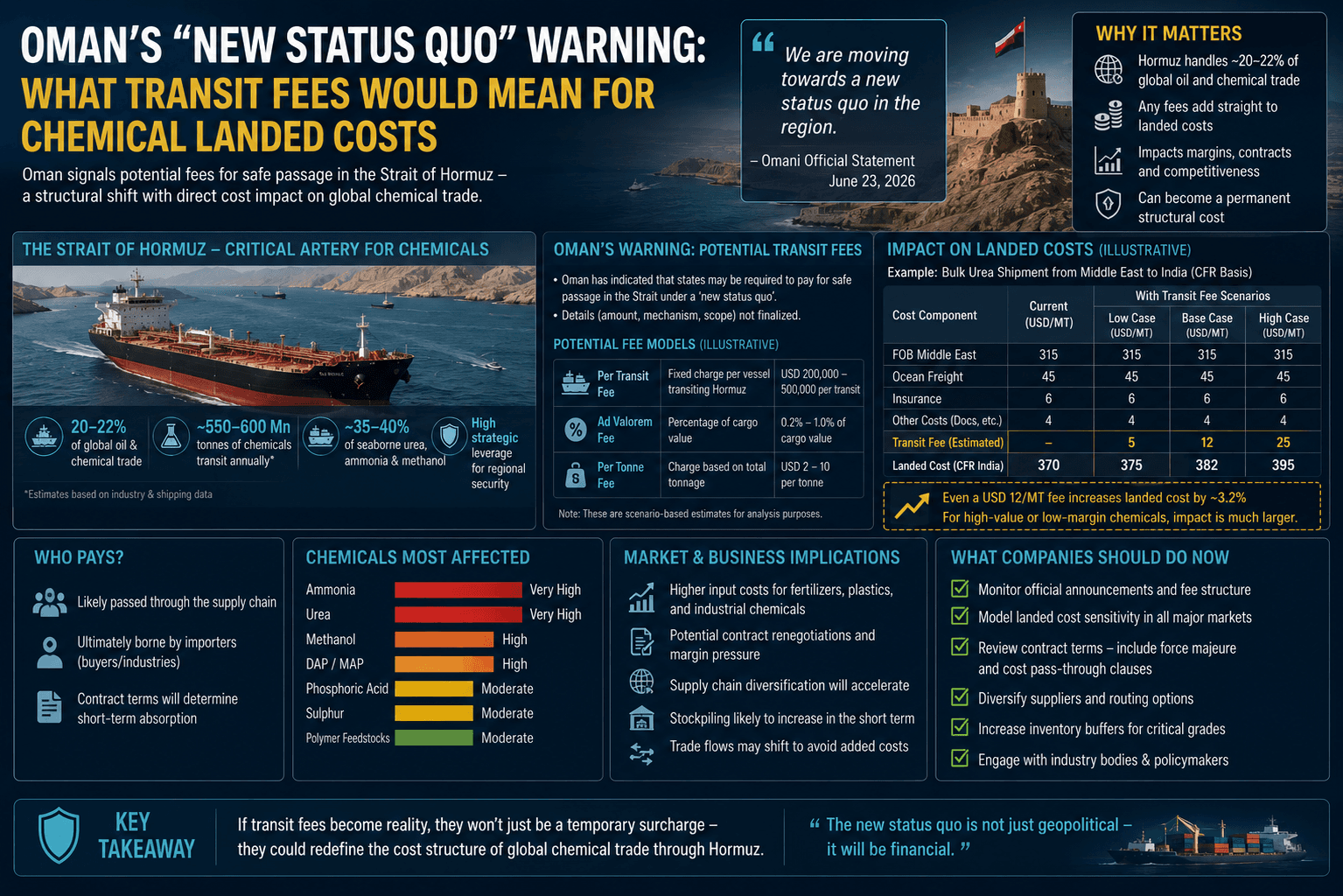
Oman’s “New Status Quo” Warning: What Transit Fees Would Mean for Chemical Landed Costs
Oman’s warning that Hormuz may never return to pre-war conditions raises the prospect of permanent transit fees for commercial vessels. Chemical buyers should immediately model higher landed costs into H2 2026 procurement planning as Gulf shipping economics may have changed permanently.
Don't miss out on our updates! Subscribe to our newsletter now
We're committed to your privacy. Tradeasia uses the information you provide to us to contact you about our relevant content, products, and services. For more information, check out our privacy policy.