

Related Insights
Ethanol and Solvents Market Outlook: How July 1 Changes Indian and Asian Buying Strategies
July 1, 2026 brings major changes for ethanol and solvent buyers as India’s duty waiver expires while lower crude prices improve production economics across Asia. This analysis explains how procurement teams can prepare for H2 2026 sourcing decisions.
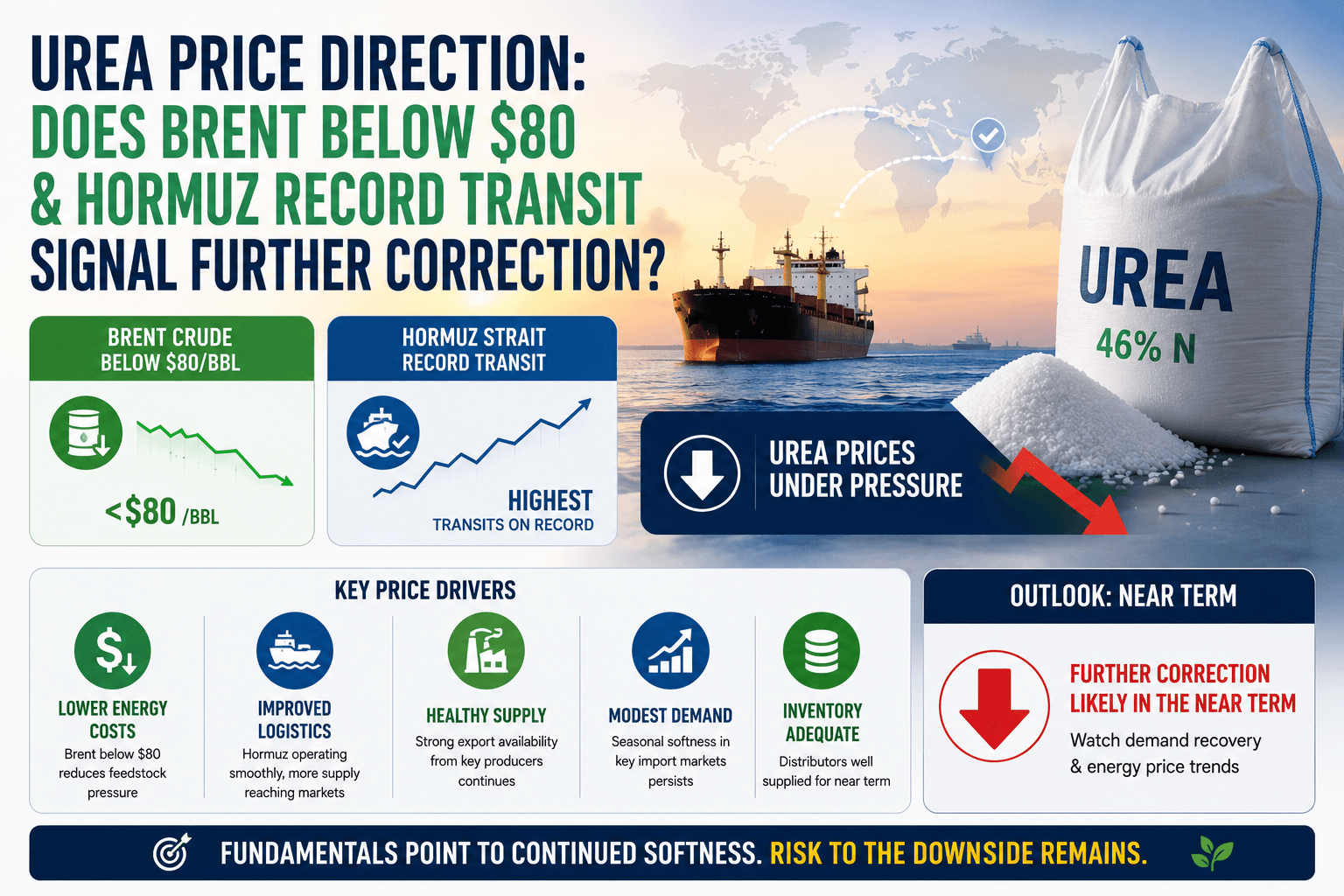
Urea Price Direction: Does Brent Below $80 and Hormuz Record Transit Signal Further Correction?
Urea prices have already fallen 36% from April highs, but improving Hormuz shipping and lower Brent crude suggest only modest further correction ahead. For fertilizer buyers, the strongest buying opportunity may already be unfolding before Q3 market stabilization begins.

Green Ammonia Market 2026: Gulf Projects Delay First Deliveries to 2027–2028
The Gulf’s ambitious green ammonia projects are facing a shift in timelines, with Saudi Arabia, UAE and Oman moving first commercial deliveries from 2026 to 2027–2028. This delay impacts offtake agreements, market expectations and the broader decarbonisation strategy across the region. TradeAsia explores the implications for investors and industry stakeholders.

Electronic Chemicals: Semiconductor Demand Structural — Not Hormuz Dependent
Unlike many chemical markets affected by the Hormuz disruption, electronic chemicals remain constrained due to structural semiconductor demand driven by AI and advanced chip manufacturing. Buyers should not expect supply conditions to ease alongside broader chemical markets in H2 2026.
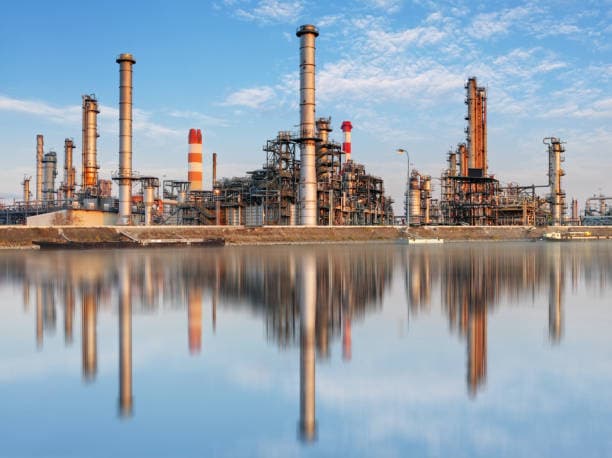
India Chemical Watch: ONGC Eyes Venezuela as Crude Diversification Drives 2026 Petrochem Market
As the Hormuz crisis reshapes global oil flows, India’s ONGC is evaluating Venezuelan crude to secure feedstock for its expanding refinery network. This move signals a broader strategy to diversify imports and stabilize the country’s petrochemical supply chain by 2026.
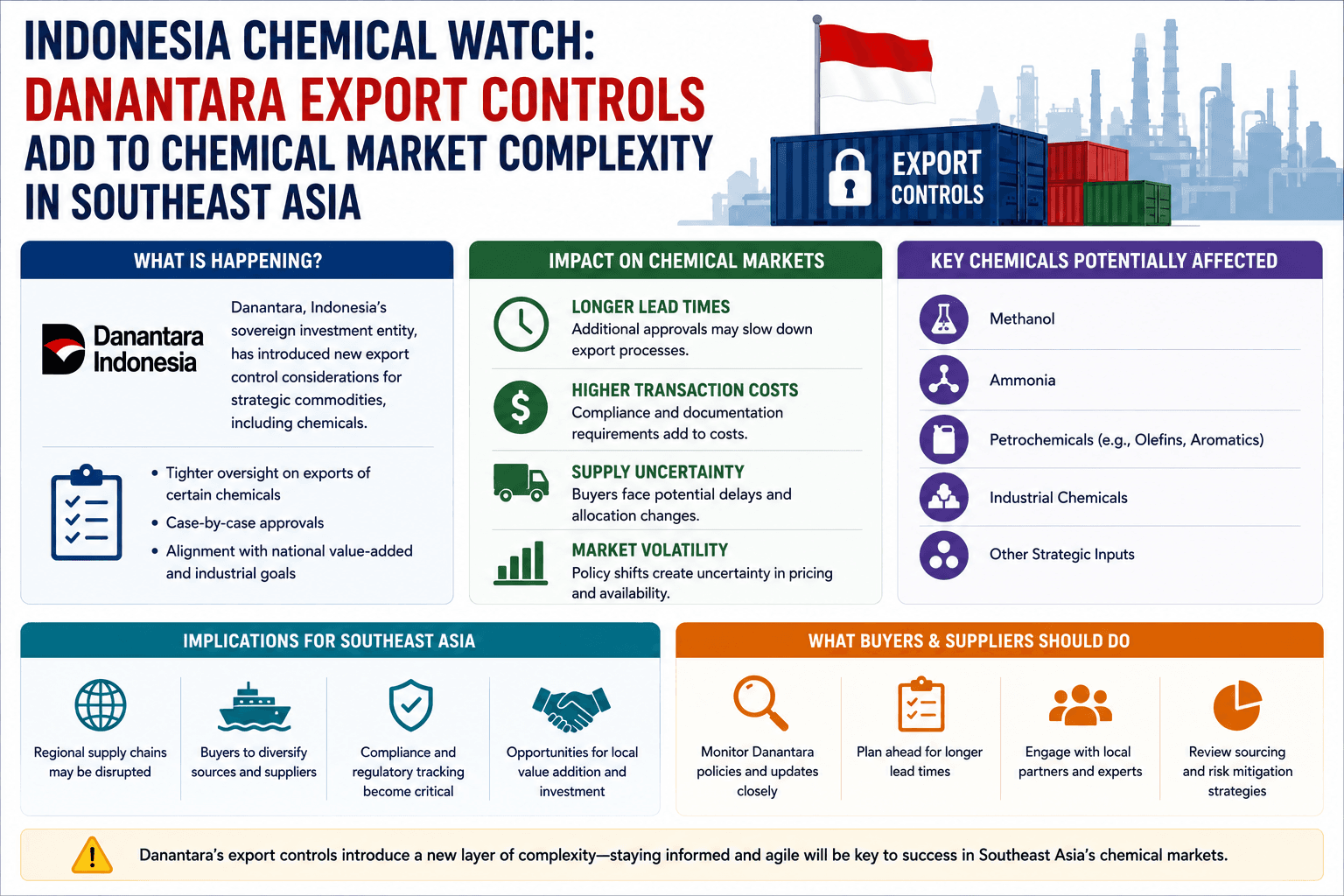
Indonesia Chemical Watch: Danantara Export Controls Add to Chemical Market Complexity in Southeast Asia
Indonesia’s tightening export controls and domestic processing strategy are reshaping Southeast Asia’s chemical trade landscape. For buyers, growing regulatory restrictions and logistics bottlenecks are making Indonesia one of the region’s most complex chemical markets in 2026.
Don't miss out on our updates! Subscribe to our newsletter now
We're committed to your privacy. Tradeasia uses the information you provide to us to contact you about our relevant content, products, and services. For more information, check out our privacy policy.